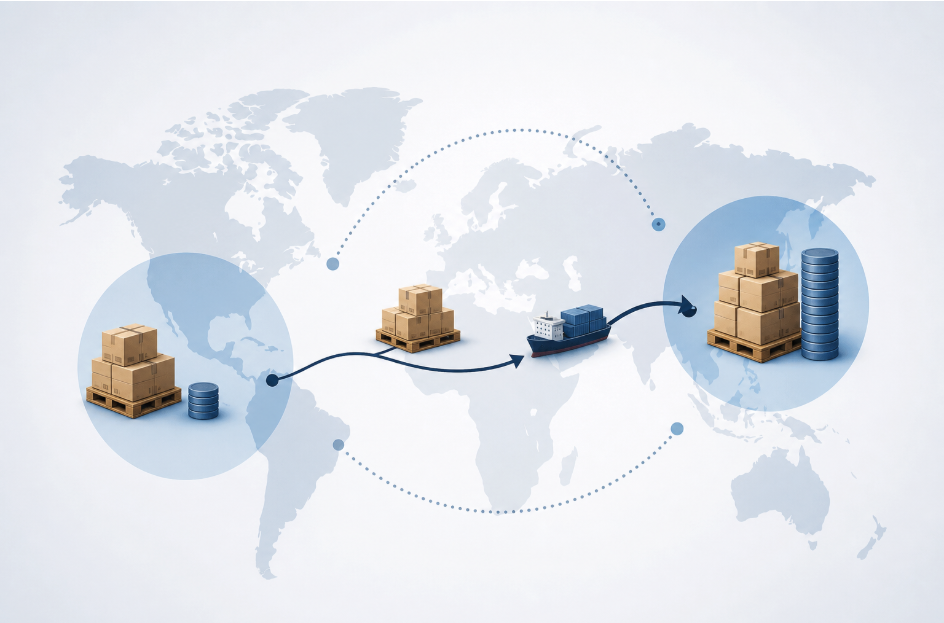
Taking your business across borders means protecting your brand in every market you enter -- and that protection starts with trademark registration. In each country you operate, it's a must. So what does it actually cost to trademark internationally?
The cost varies based on where you file, how many countries you need coverage in, and which registration method you use. This guide covers the main filing pathways, fee ranges, and key factors to consider as you budget for global protection.
TLDR:
- The Madrid Protocol lets you file in 130+ countries via one WIPO application, starting at ~$1,050 USD for 3 countries and 2 classes.
- Filing in 3 countries via Madrid costs ~$1,050-$1,500 vs. ~$2,500-$7,500 through direct national filing.
- DIY government fees run $250-$900 per country, but a single rejected application can trigger $500-$1,500 in retroactive attorney costs.
- Trademark registration is the hard prerequisite for marketplace enforcement -- without it, takedown complaints stall at the review stage regardless of evidence quality.
- MarqVision supports international brand enforcement by combining AI with global legal expertise to register and defend marks across borders.
Two Ways to File an International Trademark
For international brand protection, there are two main filing methods:
1. The Madrid System (Madrid Protocol)
The Madrid Protocol, administered by the World Intellectual Property Organization (WIPO), lets you file a single international application to request trademark protection in up to 130 participating countries (verify at wipo.int for the latest member list).
This route is ideal if:
- You're targeting multiple markets
- You already have a U.S. (or other “home”) trademark application or registration
- You want a unified, centralized process with lower upfront legal costs
2. Direct National Filing
This involves filing separate applications in each country where you want protection.
It’s more complex and costly, but may be required if:
- The country is not a member of the Madrid Protocol (e.g., some Middle Eastern or South American countries)
- You want greater flexibility or customized legal representation in specific jurisdictions
Cost of Filing Through the Madrid System
WIPO's Madrid System fees have three components. The basic fee runs 653 to 903 CHF depending on whether your mark is in black-and-white or color. On top of that, each designated country adds a per-country fee: jurisdictions using the standard rate charge a flat 100 CHF complementary fee, while countries that have opted into individual fees charge their own rate, often 200 to 300+ CHF per country. A supplementary fee of 100 CHF per class applies for each class beyond three.
Worked example: 3 countries, 2 classes: Basic fee (653 CHF) + 3 complementary fees at 100 CHF each (300 CHF) = 953 CHF. Swap any of those for an individual-fee jurisdiction (the U.S. individual fee alone can exceed 400 CHF per class) and costs climb fast. Because fees vary so much by country and class count, use WIPO's Madrid Fee Calculator for an exact figure before budgeting.
CHF = Swiss Franc; convert at current rates via xe.com before budgeting.
Cost of Direct National Filings
If you're filing directly with each country's trademark office, your total costs will depend on government fees, local legal fees, and translation or administrative costs. See our guide on filing global trademarks for a step-by-step breakdown.
Filing in multiple countries individually can quickly add up, making the Madrid Protocol more cost-efficient in many cases.
Madrid Protocol vs. Direct National Filing: Cost Comparison
Madrid Protocol is the more cost-effective route when:
- You're filing in three or more member countries
- You want to consolidate government fees into a single application
- You want to reduce attorney time by working through a single process
Direct national filing makes more sense for one or two targeted markets, or when a country isn't a Madrid member (e.g., certain Middle Eastern and South American jurisdictions where local counsel and tailored strategy are required regardless).
Ongoing Costs: Renewals and Maintenance
International trademarks don’t last forever: you’ll need to renew them, usually every 10 years.
- Madrid System: Renewals involve a basic fee (currently 653 CHF) plus any individual or complementary fees for the countries covered.
- Direct Filing: Each country sets its own renewal schedule and cost, typically ranging from $300 to $1,000+ per country.
Missing a renewal deadline can lead to loss of protection, so it's important to monitor all timelines.
DIY vs. Professional Trademark Registration: Cost Comparison
How you file matters as much as where. Self-filing cuts upfront costs but carries real financial risk; attorney-assisted filing costs more initially but typically delivers stronger, faster outcomes.
Government-only (DIY) fees typically run $250 to $900 per country; for example, a single-class USPTO filing costs $250 to $350, an EU trademark (EUIPO) runs €850 for the first class, and a China CNIPA filing is roughly $50 per class. These figures cover the filing fee only.
Attorney-assisted filing bundles government fees with professional services and typically totals $1,000 to $3,000+ per country. That fee covers: a trademark clearance search (to catch conflicts before you file), preparation and submission of the application, responses to office actions (examiner rejections or objections), and post-registration monitoring. For a three-country Madrid Protocol filing, attorney fees alone can add $2,000 to $4,000 on top of WIPO government fees.
The hidden cost of DIY is what trips most filers: a rejected application due to a descriptive mark or an unresolved conflict can mean refiling fees, amended goods/services descriptions, and months of delay. A single USPTO office action response, handled retroactively by an attorney, typically costs $500 to $1,500, often more than the original filing fee. In China, where trademark squatting is common, an unrepresented applicant who misses a conflict may lose the mark entirely and face separate opposition or cancellation proceedings.
\When DIY makes sense: You have a simple, distinctive mark; you're filing in one or two familiar jurisdictions; and you've already confirmed no conflicting marks through a clearance search. When to hire help: You're filing in three or more countries, your mark is descriptive or similar to an existing registration, or you're entering high-risk jurisdictions like China or the UAE where local counsel is effectively required. For most global brands, professional representation pays for itself by avoiding a single refiling.
Strategic Tips to Save on International Trademark Costs
- Start with priority markets: Focus first on countries where you’re actively selling or planning to launch.
- Use Madrid when possible: If your target countries are Madrid Protocol members, you’ll likely save on fees and reduce paperwork.
- Plan for class savings: Carefully group goods/services into the fewest number of classes to avoid extra fees.
- Consider consulting a trademark attorney: They can help you weigh Madrid vs. direct filing, avoid refusals, and maximize protection.Learn when to hire a trademark attorney before deciding to self-file.
FAQ
Madrid Protocol vs. direct national filing: which should you choose for a 3-country expansion?
Madrid Protocol is the more cost-effective route when filing in three or more member countries, consolidating government fees and attorney time into a single application starting at roughly 953 CHF for three countries and two classes. Direct national filing makes more sense for one or two targeted markets, or when a country is not a Madrid Protocol member, such as certain Middle Eastern or South American jurisdictions where local counsel is required regardless of filing method.
How much does it cost to trademark internationally if you skip an attorney?
Government-only fees typically run $250 to $900 per country, but a rejected application due to a descriptive mark or unresolved conflict can trigger refiling fees, amended goods descriptions, and months of delay, and a single USPTO office action response handled retroactively by an attorney typically costs $500 to $1,500, often more than the original filing fee. For filings in three or more countries, or in high-risk jurisdictions like China where trademark squatting is common, professional representation generally pays for itself by avoiding a single refiling.
Can I use the Madrid Protocol to file in China, the EU, and the U.S. in one application?
Yes, all three jurisdictions are Madrid Protocol members, so a single WIPO application covers all of them. Keep in mind that the U.S. charges individual fees that can exceed 400 CHF per class, meaning your total will climb well above the base estimate; use WIPO's Madrid Fee Calculator with each jurisdiction's specific fee schedule before setting your budget.
How often do international trademarks need to be renewed, and what does renewal cost?
International trademarks renew every 10 years. Under the Madrid System, renewal costs the base fee of 653 CHF plus any individual or complementary country fees for covered jurisdictions. Direct national filings each carry their own renewal schedule and cost, typically ranging from $300 to $1,000 or more per country, making calendar management across multiple jurisdictions an active enforcement risk if deadlines are missed.
What is the Madrid Protocol, and why does it matter for global brand protection?
The Madrid Protocol is a WIPO-administered treaty that lets rights holders file a single international trademark application covering 130-plus participating countries, instead of managing separate filings in each market. For global brands, it matters because trademark registration in each relevant jurisdiction is the hard prerequisite for marketplace enforcement. Without a registered mark in the country where an infringing ad or listing appears, takedown complaints stall at the review stage regardless of evidence quality.
Final Take: Is International Trademark Protection Worth the Cost?
For most global brands, the answer is yes. Trademarking internationally is an investment in long-term brand equity, enforcement rights, and market credibility. While costs can range from a few hundred to several thousand dollars per country, the cost of not filing can be far greater. Whether you’re expanding into two countries or twenty, understanding your international trademark costs up front can help you scale smart and protect what you’ve built.
Need help with global trademark protection? MarqVision makes international brand enforcement straightforward, combining AI and global legal expertise to help you register and defend your trademarks across borders.
Stay up to date on the latest IP Protection content from MarqVision.




4 Enforcements a Week to 400: Scale Brand Safety with Marq AI

Don’t Just Find Counterfeits. Dismantle the Entire Network.

.png)
Discover the latest trends and challenges in IP protection

Take Control of Your Trademarks with MARQ Folio
Renew and Manage Your Trademarks Easily With MARQ Folio

We’re waiting to hear from you

See the best brand protection solution in action

Don’t let piracy steal your growth

Talk to us about your brand protection problems