
The nutritional supplements category has evolved into a highly competitive, fast-moving enforcement environment where brand protection teams face unique challenges. From collagen powders and adaptogens to pre-workouts and daily multivitamins, the category's growth has been driven by influencer marketing, scientific claims, and consumer demand for personalized health solutions.
New brands are launching rapidly, formulas are constantly evolving, and customer expectations are higher than ever, creating an expanded attack surface for counterfeiters.
However, as the category grows more crowded, and more lucrative, it’s also becoming a prime target for counterfeiters. Bad actors are on consumer trust and regulatory gaps to flood the market with fake supplements that look nearly identical to legitimate products. These counterfeits often appear on the same online marketplaces and social platforms that real brands rely on to drive sales, making them difficult to detect and even harder to remove. For brand managers, the consequences are serious: customer complaints, damaged reputations, safety risks, and lost revenue, to name a few.
TLDR:
- Dietary supplements face lighter FDA oversight than pharmaceuticals, allowing counterfeiters to flood marketplaces with fakes containing harmful ingredients or undeclared allergens.
- Spot counterfeits by checking retailer authorization, inspecting packaging for misspellings and missing seals, and monitoring review spikes for unusual side effects.
- Consumer education alerts customers to fakes but doesn’t remove listings; IP enforcement through trademark takedowns actively stops counterfeiters.
- Report counterfeit supplements to the FDA even while removing listings yourself, since agencies investigate dangerous products at a scale individual brands cannot.
Why Counterfeit Supplements Are So Dangerous
Unlike pharmaceuticals, dietary supplements don’t need pre-market approval before they reach store shelves. Under the U.S. Dietary Supplement Health and Education Act (DSHEA) of 1994, the FDA does not review or approve supplements for safety or effectiveness before they are sold; instead, manufacturers themselves are responsible for ensuring their products are safe and labeled accurately. That lighter oversight leaves the door open for counterfeiters to exploit the gap and flood the market with fake supplements.
Consider the case of NOW Foods. Loyal customers began noticing subtle differences in products they purchased online, like odd smells, off colors, and capsules that didn’t match the size or texture of the genuine product. When NOW Foods investigated further, they found that these supplements were nothing more than capsules filled with plain rice flour, stripped of any beneficial ingredients. Even more alarming, some samples contained trace amounts of the prescription drug Sildenafil. This discovery underscores the real consequences posed by counterfeit products: they’re not just ineffective, they can be hazardous.
Similarly, Fungi Perfecti, the makers of Host Defense Mushrooms, discovered a network of separate Amazon storefronts selling counterfeits of their products. These fakes contained undeclared gluten (a wheat-derived protein that triggers reactions in people with celiac disease) and soy (one of the FDA's nine major food allergens): both of which are absent from genuine Host Defense products, which are certified gluten-free and tested to confirm they contain no soy. For a consumer with celiac disease or a soy allergy, an unlabeled capsule can mean anything from digestive distress to a severe allergic reaction. Fungi Perfecti’s experience highlights the lengths that counterfeiters will go to infiltrate reputable marketplaces, leaving brands and consumers alike at risk.
These cases are not isolated. The supplement market is one of the fastest-growing consumer categories online, and that growth has pulled counterfeiters in alongside legitimate sellers. Fakes cluster wherever genuine demand is highest: high-margin formats like collagen, probiotics, and weight-management products are copied first, then listed on the same marketplaces, social platforms, and search results your real products depend on. Because a counterfeit capsule can look identical to the real thing in a product photo, the threat often reaches the customer before the brand ever sees the listing. That gap between when a fake appears and when a brand detects it is where most of the damage happens.
How to Spot Fake Supplements
For brand owners and consumer safety advocates, vigilance starts with education. Here’s how to spot red flags and guide your customers to do the same:
- Examine the Retailer. Supplements sold through third-party marketplaces like Amazon and Walmart.com often lack oversight. Encourage customers to purchase directly from your website or provide a list of clearly authorized resellers.
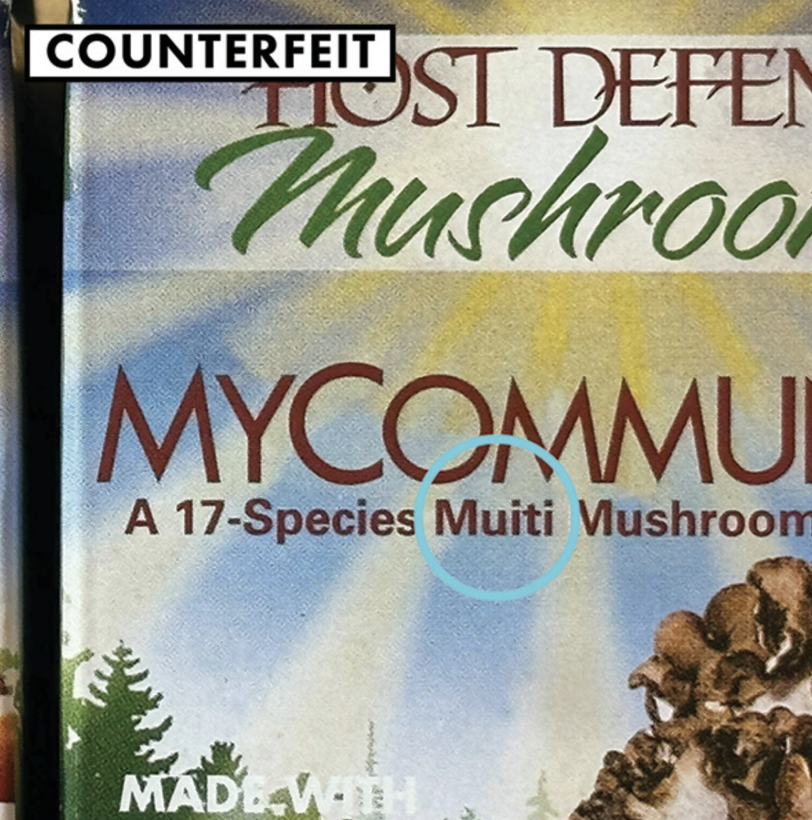
- Check the Packaging. Counterfeit products often feature subtle inconsistencies: misspelled words (“muiti” instead of “multi”), slightly off fonts, or color mismatches. Authentic packaging should include lot numbers, expiration dates, tamper-evident seals, and clear contact details. Legitimate third-party certifications like non-GMO or gluten-free also help signal authenticity.
- Inspect the Product Itself. Gritty texture, bad smell, or an odd aftertaste? These are common signs of a fake. Authentic supplements should look and feel consistent across batches.
- Pay Attention to Reviews. Sudden spikes in negative reviews or reports of unusual side effects are often early indicators. Encourage your customers to leave reviews and report anything that feels off: your community can be your first line of defense.
How to Fight Back: Protecting Your Brand and Consumers
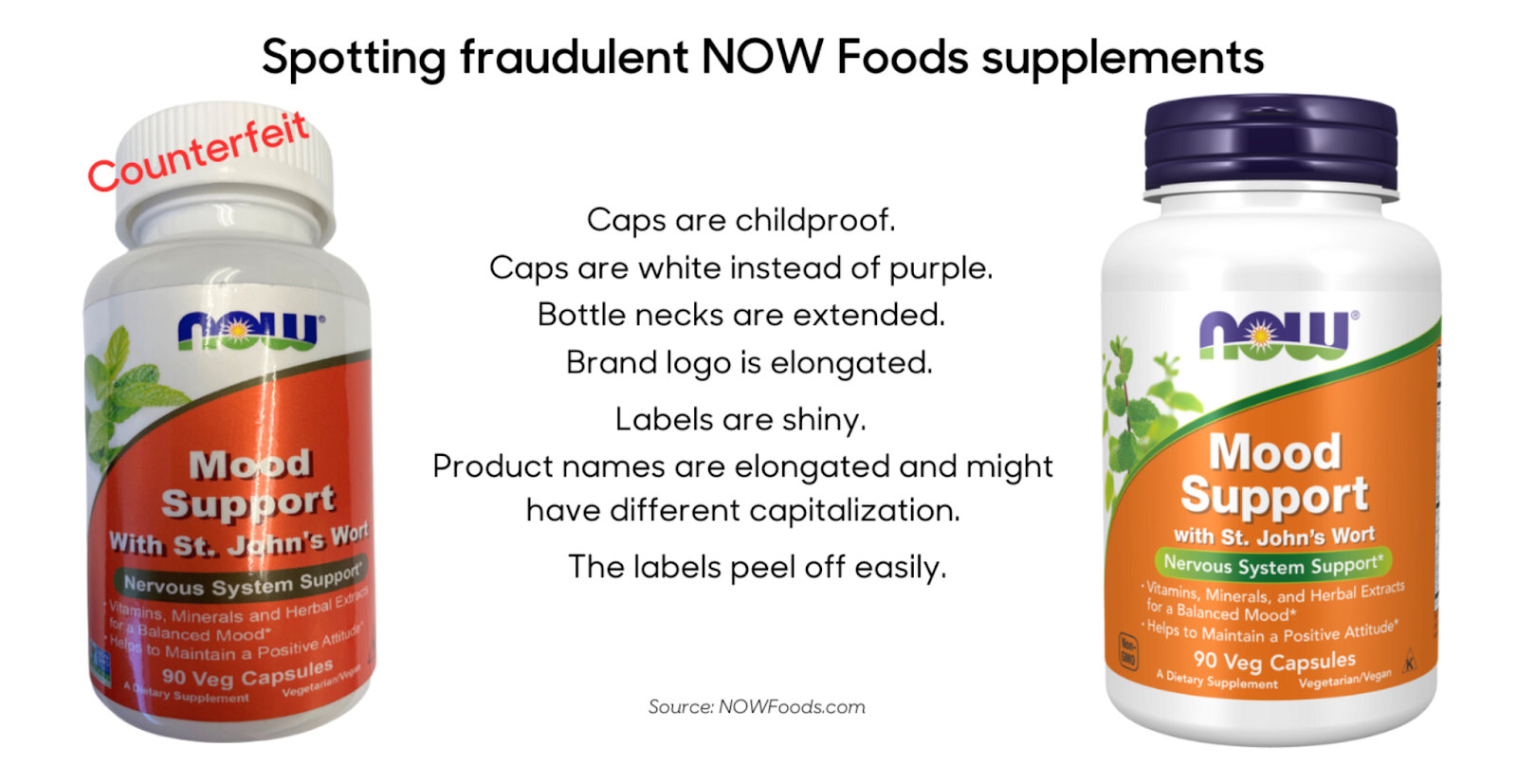
First of all, consumer education is an essential pillar of brand protection. By providing resources that help customers identify genuine products and report suspicious listings, you can transform your loyal consumer base into a powerful extension of your brand protection efforts. Educational materials like the guide that Now Foods published (shown below) can help equip your customers to become allies in safeguarding your brand’s integrity.
Intellectual property (IP) enforcement also plays a vital role in defending your brand. Taking swift action against counterfeiters by leveraging your trademarks – whether through takedowns on e-commerce platforms, test buys to confirm authenticity issues, or direct legal action – can help secure your market and stem the tide of fakes. Fungi Perfecti’s experience underscores the importance of these efforts: continuous monitoring and enforcement actions can reduce unauthorized listings, restore consumer trust, and re-establish your rightful place in the marketplace.
The detail that separates effective enforcement from busywork is who you target. A single takedown removes one listing, but the same operator often relists within hours under a new storefront. You stop far more counterfeits by tracing listings back to the seller behind them and going after the accounts that move the most product first, instead of removing low-impact listings one at a time. For supplements specifically, a test buy does double duty: it confirms the product is fake and produces the physical evidence (mismatched lot numbers, missing seals, off-spec capsules) that platforms increasingly require before they will act on a counterfeit report.
Finally, reporting to regulatory agencies such as the FDA is critical whenever counterfeit products are found. These agencies rely on actionable reports to investigate and remove dangerous products from the market. Timely and accurate reporting allows regulators to take decisive action, safeguarding your brand, the broader market, and consumer health.
Final Thoughts
In an industry built on trust and safety, counterfeit supplements threaten everything your brand stands for. With proactive education, airtight IP enforcement, and a clear strategy for platform monitoring, your brand can stay one step ahead.
Want to learn how to protect your supplement products in the age of fakes? Explore MarqVision’s brand protection solutions for natural health products and see how your brand can stay safe and competitive in this fast-growing market.
FAQ
Can counterfeit supplements actually harm consumers?
Yes. Counterfeit supplements can contain harmful ingredients, exclude advertised active ingredients entirely, or include prescription drugs like Sildenafil without disclosure. NOW Foods discovered counterfeits filled with plain rice flour instead of beneficial ingredients, while Host Defense Mushrooms found fakes containing undisclosed allergens like gluten and soy that posed serious health risks to consumers with allergies.
What's the fastest way to identify fake supplements online?
Check the retailer first: unauthorized third-party sellers on marketplaces like Amazon are the highest-risk sources. Then examine packaging for misspellings, color mismatches, missing lot numbers, or absent tamper-evident seals. Finally, read reviews for sudden spikes in negative feedback or reports of unusual side effects, which often signal counterfeit distribution before brands detect it themselves.
How do I protect my supplement brand from counterfeits vs. just educating customers?
Customer education helps consumers spot fakes, but it doesn't remove counterfeit listings from marketplaces or stop bad actors from operating. IP enforcement, through trademark-based takedowns, test purchases to confirm authenticity issues, and platform monitoring, actively removes fake products before they reach more consumers. Both tactics work together: education turns customers into allies, while enforcement removes the threat at the source.
Should I report counterfeit supplements to the FDA even if I'm already removing listings?
Yes. Regulatory reporting to agencies like the FDA is critical because they can investigate and remove dangerous products at a scale individual brands cannot. Agencies rely on actionable reports from brands to initiate enforcement actions, and timely reporting protects not just your brand but the broader market and consumer health.
Stay up to date on the latest IP Protection content from MarqVision.




4 Enforcements a Week to 400: Scale Brand Safety with Marq AI

Don’t Just Find Counterfeits. Dismantle the Entire Network.

.png)
Discover the latest trends and challenges in IP protection

Take Control of Your Trademarks with MARQ Folio
Renew and Manage Your Trademarks Easily With MARQ Folio

We’re waiting to hear from you

See the best brand protection solution in action

Don’t let piracy steal your growth

Talk to us about your brand protection problems